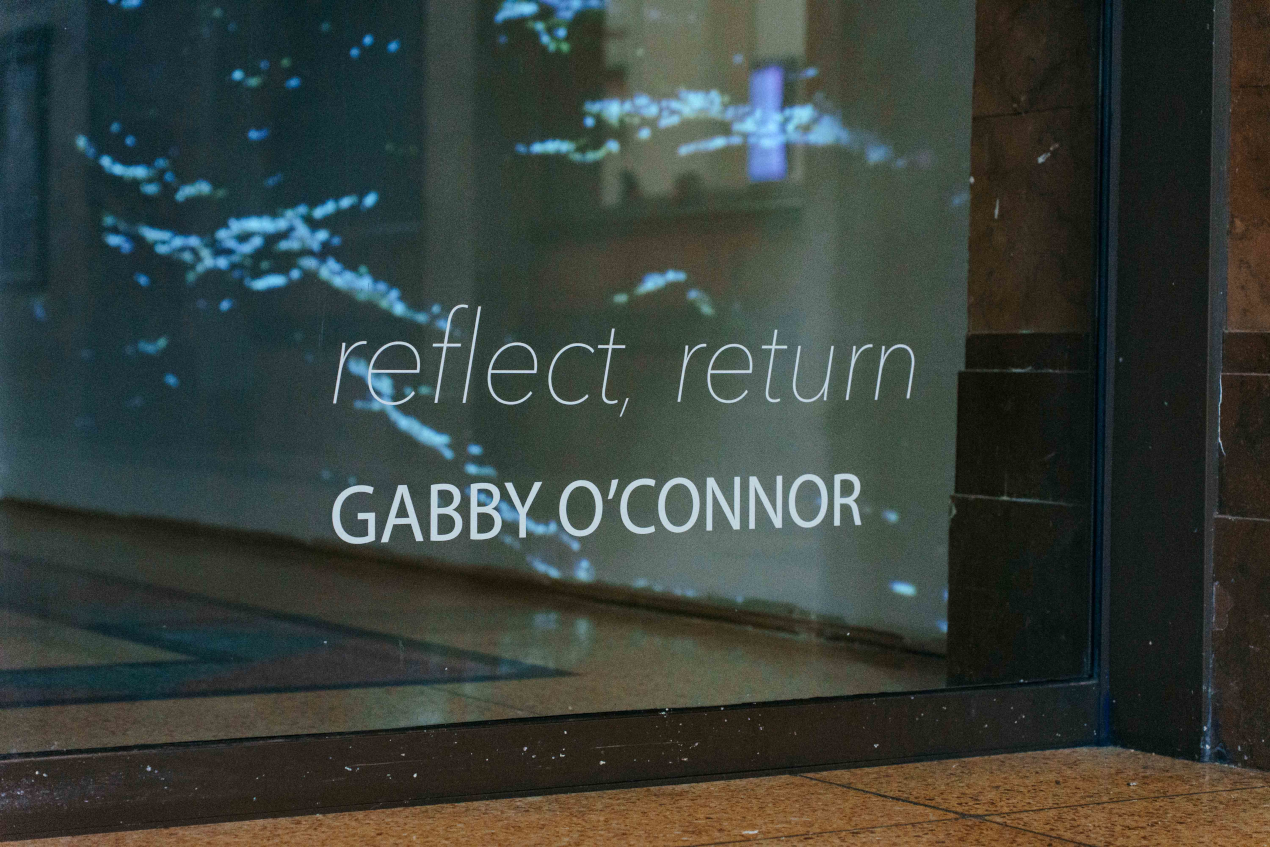
reflect, return.
Presented by Gabby O’Connor supported by Massey University and Wellington City Council Te Whare Hēra Artist Residence
Location: Wellington Railway Station
Property partner: Kiwirail
Dates: 28th July - 14th August 2026
Media: Linked here
Images: Florence Hilyer-Brandt
As one of our cities more visible artists we are thrilled to have Gabby back in our programme having featured her earlier work Cleave back in the early time of the brokerage in 2013. Throughout O’Connor has continued to champion the artists as a resident with her connection in scientific institutions and their research, present in her presented in this series.
During her current residency at Te Whare Hēra on Clyde Quay Wharf, O’Connor has been looking closely at the relationship between ocean, land and city in Te Whanganui-a-Tara. From the former overseas terminal, she can see Wellington Railway Station across the harbour and has been thinking about the journeys that once connected these two places, including the arrival of her partner’s family by ship before they travelled north by rail. Her wider project, *Ocean Collaboration Lab*, brings together observations, conversations and collaborations with scientists, artists and ocean enthusiasts, exploring how water, fault lines, shifting coastlines and hidden histories continue to shape Wellington.
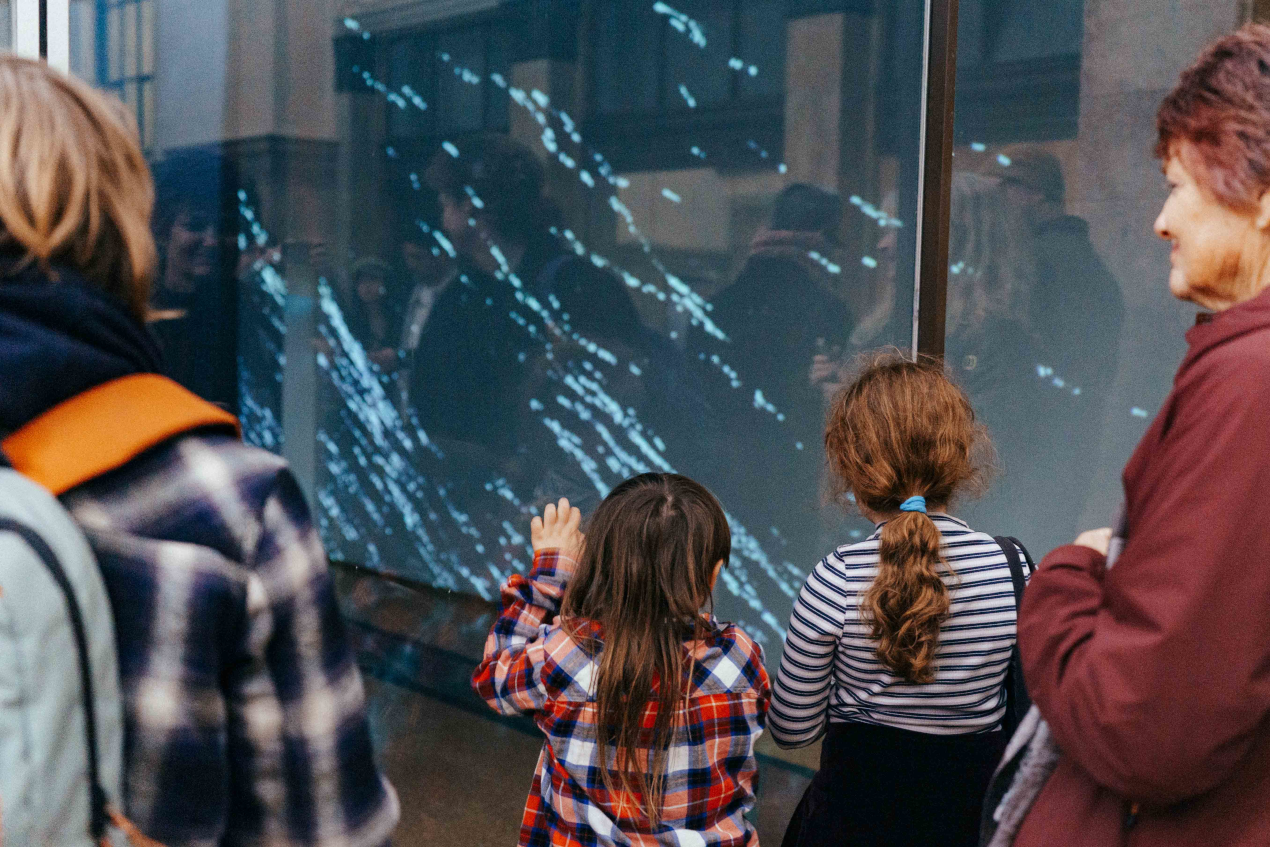
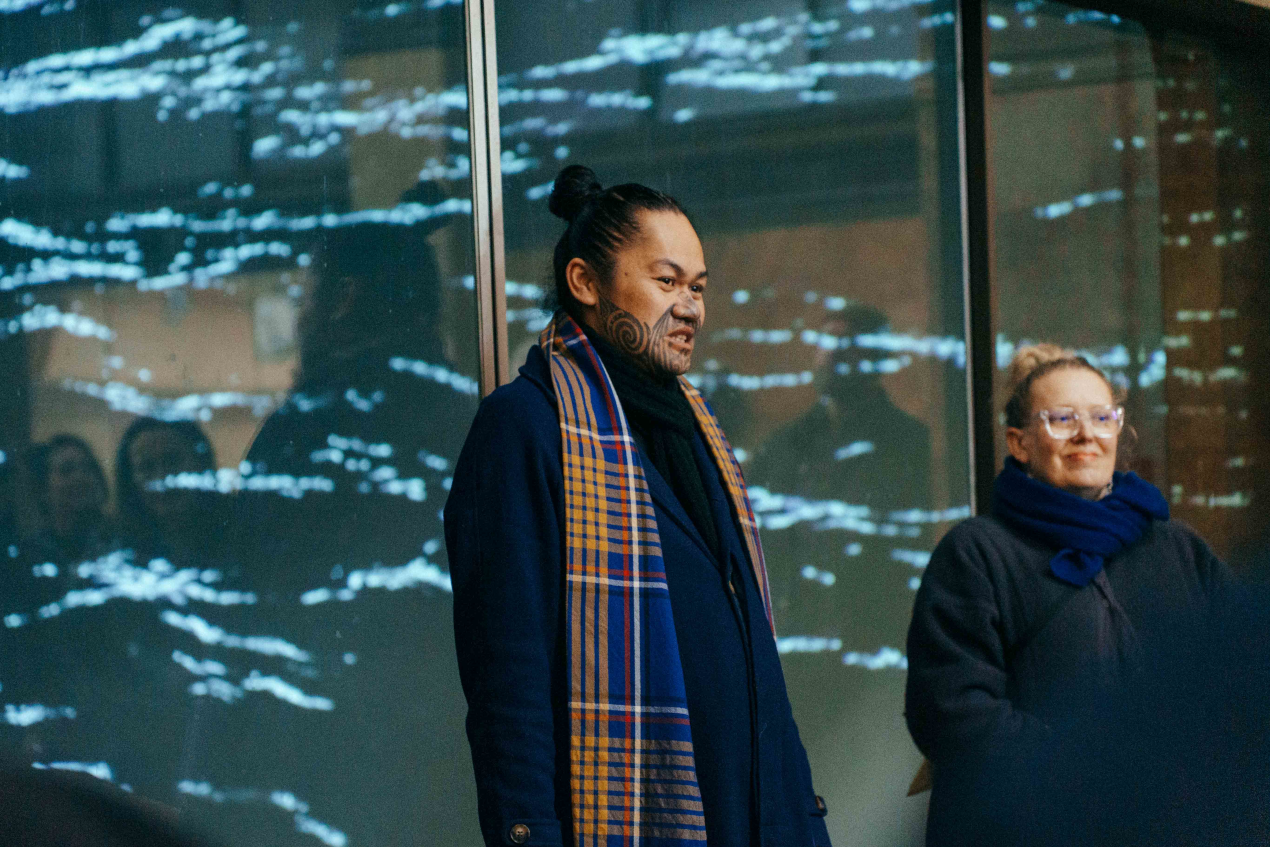
For the Railway Station, O’Connor will create a quiet moving-image installation that brings the ocean back into a place that was once part of the harbour. Recorded at night, the work captures white light moving across dark water, tracing the crests, textures and edges of waves. Projected onto a dark unused interior within the station, these flickering forms will appear like an imaginary portal — a glimpse of the water that once sat beneath the site, and of the deep histories that remain present within the city.
Dr Gabby O’Connor is an artist, transdisciplinary researcher, Antarctican, science communicator and educator. Her work operates across multiple disciplines and audiences– between contemporary art, science communication, social science and community action, and looks at different entry points to conversations to science, place and our changing climate. She frequently collaborates with scientists, other artists, researchers, policy-makers, audiences and school students, thinking beyond normal definitions of stakeholder and public. This strategy acts as an access-point for diverse communities to be part of the conversation around science with artistic methods as the delivery system.
: